Table of Contents
Do you regularly—or occasionally—use a dating app, but have you ever wondered where your data ends up when you sign up on them? That’s not paranoia, that’s a fair and important question. Dating app privacy is something most of us overlook in the rush to set up a profile and start swiping — but the risks are real, and ignoring them can have consequences that go well beyond an awkward first date.
According to a Mozilla Foundation report, about 88% of the most popular dating apps reviewed received the “Privacy Not Included” label, and many collect sensitive personal data — including location, preferences, and private content — often for purposes beyond the core functionality of the service. For members of the LGBTQ+ community — especially in contexts where identity remains sensitive — this is not an abstract concern.
The good news? A few smart habits can dramatically reduce your exposure without making the whole experience feel like a chore. Here’s everything you need to know.
💭 The moment I started taking this seriously
A few years ago, while I was still coming out to friends and family — one careful step at a time — I realized a popular dating app had been sharing my precise GPS coordinates with third-party data brokers. Nothing catastrophic happened, but it made me think about who could theoretically access that data and in what context. A wake-up call I’m glad came early.
Since then, I’ve treated privacy settings as something I actually open, not something I tap “accept” on without reading. It takes ten minutes and the peace of mind is worth every second of it.
Why Dating App Privacy Matters — Especially for Our Community
Dating apps collect sensitive data that goes far beyond your name and age: sexual orientation, precise location, photos, and private messages. For LGBTQ+ users, that information can carry real personal safety implications — in certain countries, but not only there.
The ILGA World report highlights that homosexuality is still criminalized in over 60 countries.
Even if you live in a safe country, you may travel, have family abroad, or simply not want sensitive information circulating beyond your control.
Here are the most concrete risks worth understanding before you open the app.
Location Data: The Most Underestimated Risk
Many apps use GPS data not only to show you nearby profiles, but to store a history of your movements and sell it to data brokers. In 2021, an investigation by The Markup revealed that several major apps were sharing precise GPS coordinates with commercial partners. The fix is simple: set location access to “only while using the app” and, where possible, enable approximate rather than precise location in your phone’s settings.
Photos and Biometric Data
Profile photos can be analyzed through facial recognition technology by third parties — including companies you’ve never heard of. Avoid reusing photos from your Instagram or LinkedIn profiles, as they make cross-platform identification much easier. Use dedicated photos for dating apps, ideally taken in non-identifiable settings or backgrounds.
5 Privacy Settings to Check Right Now
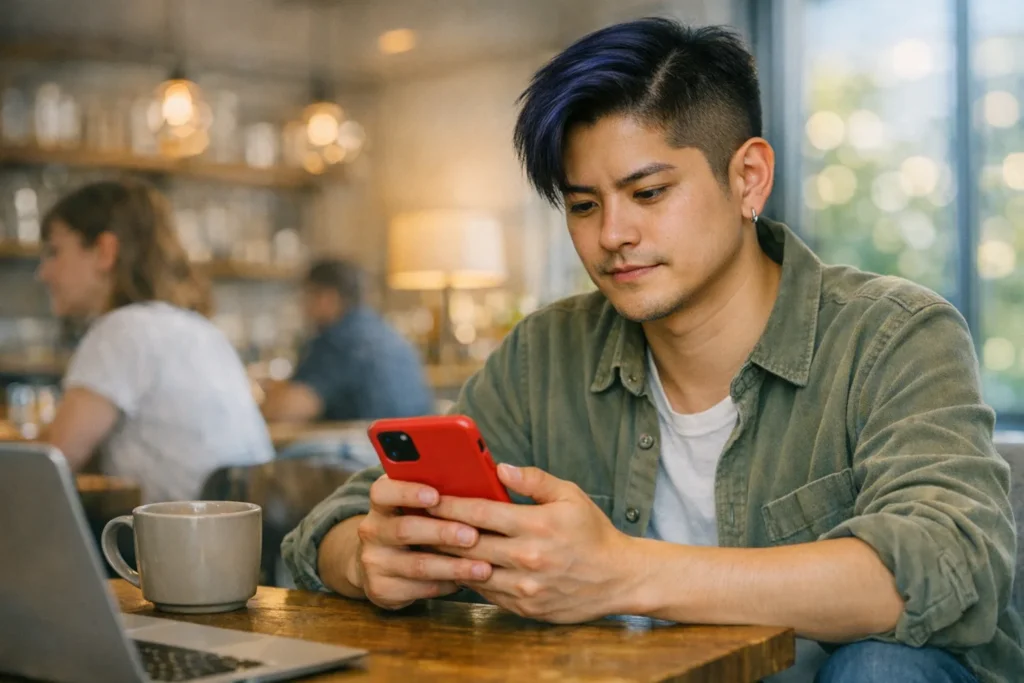
Five practical actions you can take in the next ten minutes to meaningfully improve your dating app privacy — without deleting anything or stopping using the apps you enjoy.
According to a study by the Pew Research Center, more than half of users often agree to terms without reading privacy policies or settings before creating an account.
Yet it only takes a few minutes to make a difference.
- Limit profile visibility. Most apps let you control who can see your photos and personal details: matches only, or everyone? Set this intentionally. Many platforms also let you show a distance range (e.g., “within 10 km”) instead of your exact location.
- Disable precise location. Go to your phone’s settings and switch location access to “approximate” or “only while using the app.” It doesn’t significantly affect the core features, but it limits exposure considerably.
- Review microphone and camera permissions. Some apps request permanent background access to your microphone or camera — that’s not necessary. Revoke these permissions and grant them manually when needed.
- Find the “data sharing with third parties” toggle. Look in the privacy settings section for options around sharing your data with advertising or commercial partners. Many apps allow you to opt out of this.
- Use a dedicated email address. Create a separate email for dating apps, away from your personal or work account. In the event of a data breach, the impact stays contained.
These habits are part of broader digital hygiene — but on dating platforms, where we share some of our most personal information, they become especially important.
It’s also worth doing some research before choosing which platform to trust. You can read more about how to choose app platforms that genuinely prioritize LGBTQ+ privacy — because not all of them do.
Spotting (and Avoiding) User-Level Privacy Risks
Not all risks come from the app itself — some come directly from other users. Catfishing, romance scams, and non-consensual information gathering are real and common, but they’re recognizable once you know what to look for.
A 2022 Stanford University study found that 17% of dating app users reported experiencing at least one form of privacy violation from another user — including non-consensual screenshots, sharing of private information, or attempted doxxing. That’s a significant number, and it underlines why building in some personal boundaries matters.
Practical guidelines to keep in mind:
- Don’t share your phone number, home address, or workplace until you’ve met in person and built some trust.
- Keep conversations inside the app’s native chat as long as comfortably possible before moving to other platforms.
- Run a reverse image search (Google Images or TinEye) if a profile feels off or too good to be true.
- Report suspicious profiles — you’re helping protect the rest of the community, not just yourself.
If you want to go deeper on spotting fake identities, check out our guide on how to recognize catfishing before it becomes a problem. And if you’re concerned about more organized romance scams, our guide on how to avoid scams in online dating covers everything you need to know.
🛡️ Looking for a safe and inclusive platform?
GoGay.Dating is designed for the LGBTQ+ community with verification tools and maximum privacy.
30-day free trial!
Note: This article is for informational purposes only and does not constitute professional, psychological, or legal advice. For specific situations, please consult qualified professionals. The experiences shared are personal and may vary.
Conclusion
Protecting your dating app privacy isn’t about being fearful or giving up on connection — it’s about making deliberate choices about what you share, with whom, and on what platforms. A few minutes on your privacy settings, some attention to suspicious profiles, and a preference for platforms that actually respect your data can make an enormous difference.
The LGBTQ+ community deserves digital spaces that are as safe as physical ones. Use these tools, share them with people you care about, and remember: your identity, your location, your story — that’s your data, and it’s worth protecting.
✍️ By the GoGay Editorial Team
The editorial team at news.gogay.dating shares authentic experiences from the LGBTQ+ community. Learn more →